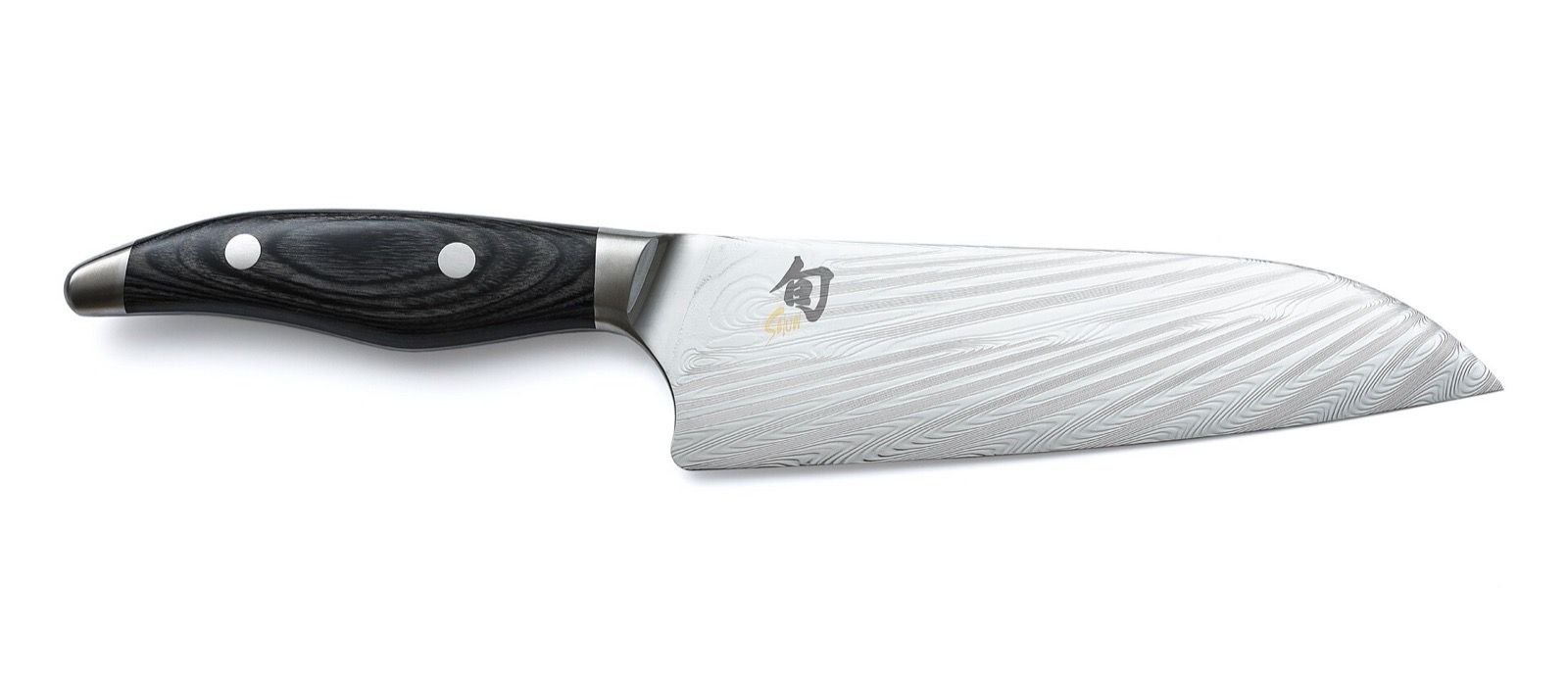
Ask someone in Japan which knife is in their kitchen drawer and the answer is almost always a santoku. It is not the knife of sushi counters or famous smiths. It is the knife of home cooking. Our editor grew up with something quite different.
A drawer of specialists
Each of those knives had one job. The deba is heavy and thick-spined, for heading and filleting fish. The sashimi knife is long and single-bevelled, for slicing raw fish in one pull. The vegetable knife is thin and square. A kitchen that broke down whole fish and birds needed all of them, and someone who kept them sharp.
One knife instead of six
Knife makers tell the santoku’s origin in similar ways. Kai says it was born around the 1940s, as Japanese eating habits began to change, by combining the vegetable knife, the deba and the Western gyuto (Kai). Tojiro describes two steps: in the Showa era the bunka knife merged the gyuto and the vegetable knife, and a rounded-tip version, the santoku, then won its place in homes (Tojiro). Kiya, founded in 1792, says the kama-gata knife, another name for the same household shape, spread rapidly in ordinary homes after the Second World War (Kiya).
Sources tie its rise to one change in particular: more meat on the table (Ichimonji). Our editor sees a wider shift.
The santoku today
Today it is close to universal. In a 2022 survey of 560 women in Japan, 96.2% owned a santoku (Kodomo Living). It is cheap enough to buy at a 100-yen shop, yet people still choose carefully.
If you want the knife Japanese homes reach for, start with a stainless santoku. Read gyuto or santoku if you are still choosing.
Each link opens an Amazon search, not one product we picked. Check the listing for the details above, the price and shipping to your country.
Sources and checks (5)
- Kai (貝印), KAI LIFE: 三徳包丁とは Used for: Origin around the 1940s, from the vegetable knife, the deba and the gyuto; the most widespread knife in Japanese homes. Checked 3 Nov 2026.
- Tojiro (藤次郎), 包丁の歴史と文化 Used for: The bunka knife in the Showa era, then the rounded-tip santoku. Checked 3 Nov 2026.
- Kiya (木屋), 包丁の種類 Used for: The kama-gata knife spreading in homes after the Second World War. Checked 3 Nov 2026.
- Sakai Ichimonji Mitsuhide (堺一文字光秀), 三徳包丁とは Used for: The santoku spreading as more meat came to the table. Checked 3 Nov 2026.
- Kodomo Living (こどもりびんぐ), women's knife survey, Nov 2022 Used for: 96.2% of 560 respondents owning a santoku. Checked 3 Nov 2026.
Notes from our editor, Shota Ando, come from recorded conversations, dated on each note. Published facts come from the sources above, which we reopen and check against the text. Amazon links are searches, not paid placements. How we work
Photo credit: Simon A. Eugster, CC BY-SA 4.0, via Wikimedia Commons. Resized and converted to WebP and AVIF.